Frugal Innovation. Global Standards. Indian Engineering.
Most hyperloop concepts remain theoretical due to astronomical costs. At TuTr, a Cargo-First, Passive-Track architecture makes high-speed transport commercially realistic.
6x
Throughput
100%
Electric
30%
Lower OPEX
Passive Infrastructure
The pod carries the intelligence while the track remains simple, reducing infrastructure complexity and significantly lowering capital costs.
Modular Evolution
A phased technology rollout built for immediate freight applications and long-term expansion into higher-speed systems.
Sovereign Supply Chain
A rare-earth-free approach designed to reduce dependency on global material bottlenecks and support local manufacturing resilience.
01. Propulsion - Linear Induction Motor
Rare-Earth-Free Mobility
The Linear Induction Motor is the core of the system. Instead of rotating wheels through mechanical transfer, it creates direct thrust using electromagnetic interaction between the pod and track.
Magnet Independence
Uses locally sourced standard materials instead of expensive permanent magnets
Direct Efficiency
Thrust is generated without friction-heavy gear systems
Operational Goal
Built for 150 to 200 km/h high-frequency cargo corridors
02. Magnetic Levitation
Frictionless Flight
Electromagnetic Suspension (EMS)
As speed increases, the pod transitions into levitation mode, eliminating mechanical friction and enabling a smoother, more efficient transport experience.
Active Control
Sensors continuously maintain precise air gap stability
Lower Resistance
Levitation reduces drag and rolling resistance compared with conventional systems
Speed Transition
Engages at approximately 50 km/h and supports acceleration toward 400 km/h
03. The Vacuum Environment
Breaking the Aerodynamic Ceiling
At ultra-high speeds, air resistance becomes the biggest barrier. A low-pressure tube environment dramatically reduces drag, unlocking much higher speeds with lower energy input.
Low Drag
Vacuum assist reduces aerodynamic resistance by over 90%
Scalable Path
Forms the bridge toward future passenger operations
Tube Durability
Engineered for thermal movement and India’s diverse environmental conditions
VALIDATED BY THE BEST
TuTr’s technology is not just conceptual
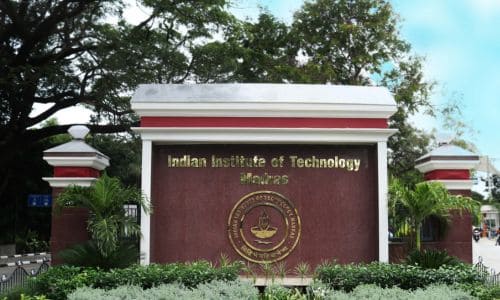
It is incubated at IIT Madras and strengthened through active validation pathways involving Indian Railways and major port authorities.
IIT Madras Incubated
Technology incubated and mentored at IIT Madras
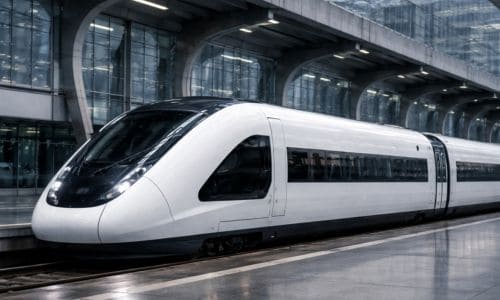
Indian Railways Engagement
Collaborating on integration, standards, and deployment pathways
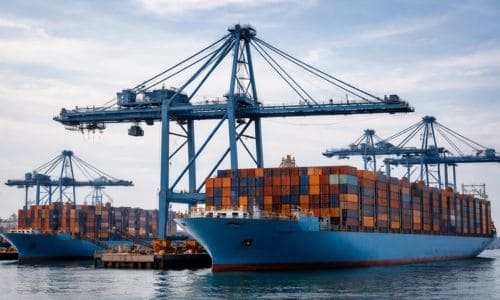
Port Authority Validation
Exploring hyperloop connectivity for faster, smarter freight movement
Built for Real Deployment
Engineered for Indian conditions. Designed for commercial impact.
TuTr’s technology is not just conceptual
A practical, scalable hyperloop system begins with freight, grows through proven technology, and moves toward a faster, cleaner transport future.